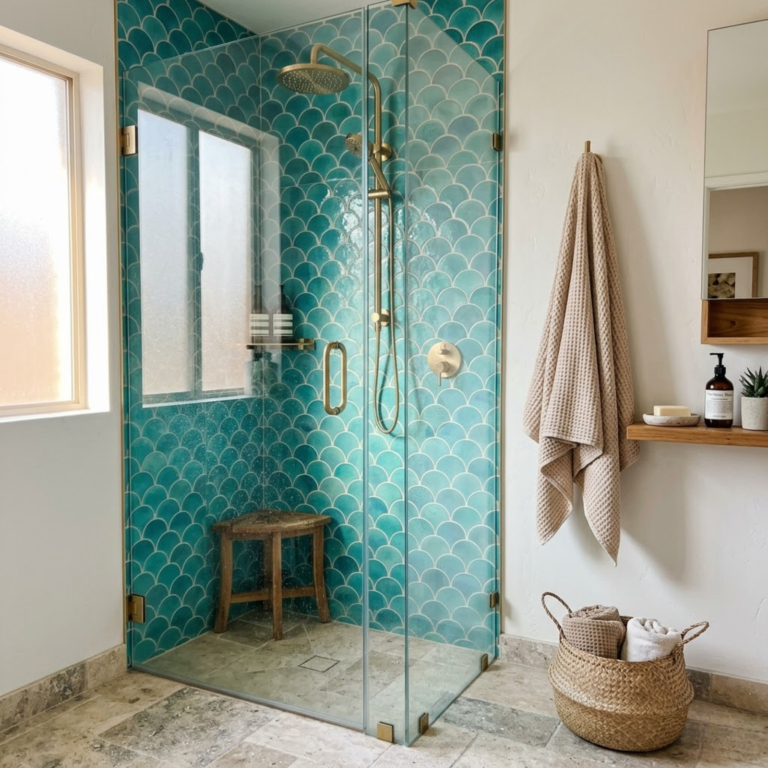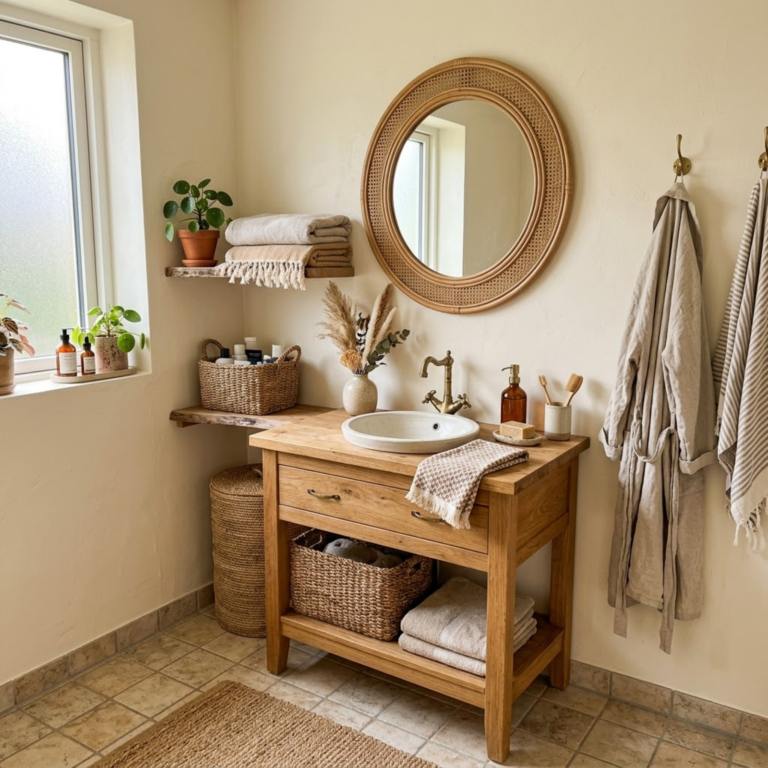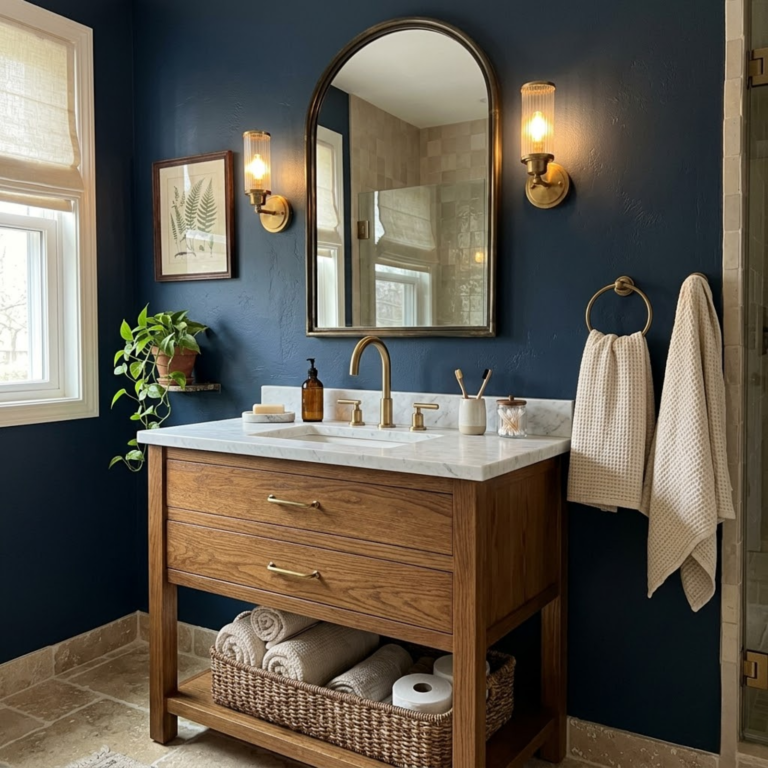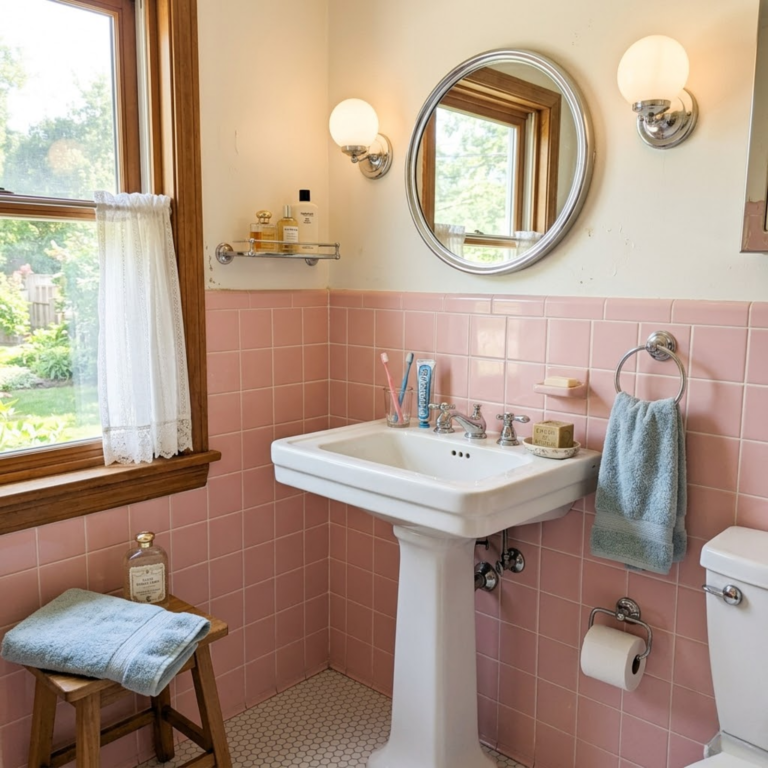

Wabi sabi bathrooms are designed around calm, simplicity, and the quiet beauty of imperfection. Instead of glossy perfection and overly polished surfaces, this style celebrates natural texture, handmade details, soft irregularity, and materials that feel honest.
A wabi sabi bathroom might include limewash walls, stone sinks, unfinished wood, handmade tiles, clay vessels, linen towels, organic mirrors, muted colors, and soft natural light. If you prefer a more colorful tile moment, these mermaid tile bathroom ideas can inspire a softer coastal-inspired bathroom with scallop shapes, sea-glass tones, and fresh modern finishes.
The result feels peaceful, grounded, and deeply restorative.
The best part is that wabi sabi does not require a large or luxurious bathroom. Even a small bathroom can feel soulful with the right palette, texture, lighting, and restraint. These wabi sabi bathroom ideas will help you create a space that feels warm, imperfect, minimal, and beautifully calming.
1. Start With Limewash or Plaster Walls
Limewash and plaster walls are perfect for a wabi sabi bathroom because they add soft movement and natural variation. Instead of flat paint, the surface has depth, shadow, and a handmade quality.
Choose warm white, stone, beige, clay, greige, or soft taupe. These colors keep the bathroom calm while letting the texture become the main decorative feature.

2. Choose a Natural Stone Sink
A natural stone sink instantly brings wabi sabi character to the bathroom. The irregular veining, subtle color changes, and tactile surface make the vanity feel grounded and unique.
Pair a stone basin with a simple wood vanity, wall-mounted faucet, and quiet lighting. Keep the styling minimal so the stone remains the focal point.

3. Use Warm Wood for Softness
Warm wood keeps a wabi sabi bathroom from feeling cold. Oak, teak, walnut, reclaimed wood, or pale unfinished wood can all bring softness and natural grain.
Use wood through a vanity, stool, shelf, mirror frame, bath tray, or small bench. Let the wood show knots, grain, and natural variation for a more honest, relaxed look. If you love warm wood, natural texture, cozy layers, and relaxed earthy styling, these modern rustic living room ideas can help you bring the same grounded feeling into another room.

4. Add Handmade Zellige Tile
Handmade zellige tile works beautifully in wabi sabi bathrooms because no two tiles look exactly the same. The slight unevenness, soft shine, and irregular edges create quiet movement.
Use zellige in a shower, backsplash, niche, or behind the vanity. Choose muted shades like ivory, sand, clay, sage, taupe, or soft gray for a peaceful look.

5. Keep the Color Palette Earthy
A wabi sabi bathroom feels best with colors that come from nature. Warm white, sand, stone, clay, mushroom, greige, soft brown, muted green, charcoal, and pale terracotta all work beautifully.
Avoid colors that feel too sharp or synthetic. The palette should feel quiet, grounded, and easy on the eyes.

6. Style With Imperfect Ceramics
Imperfect ceramics are a small but powerful wabi sabi detail. A hand-thrown vase, uneven soap dish, clay cup, or ceramic tray can add personality without clutter.
Choose pieces with visible texture, soft edges, matte finishes, or subtle glaze variation. These details make the bathroom feel collected and human.

7. Choose a Soft Organic Mirror
An organic mirror can soften a bathroom instantly. Instead of a perfect rectangle, try a rounded mirror, pebble-shaped mirror, arched mirror, or wood-framed mirror with natural movement.
The mirror should feel gentle, not overly decorative. A simple irregular shape above a stone sink or wood vanity can make the whole room feel calmer.

8. Add Linen Towels
Linen towels bring softness and relaxed texture into a wabi sabi bathroom. They look beautiful slightly rumpled, which fits the imperfect and lived-in feeling of the style.
Choose warm white, oatmeal, stone, sage, clay, or charcoal linen. Hang them casually on a hook, fold them on a stool, or layer them near the bathtub.

9. Use Stone Flooring
Stone flooring adds grounding texture to a wabi sabi bathroom. Limestone, travertine, slate, pebble tile, tumbled stone, or stone-look porcelain can create a quiet natural base.
Choose a honed or matte finish rather than something too glossy. The softer surface helps the bathroom feel more organic and spa-like. For more inspiration with natural stone, texture, and timeless focal points, these stone fireplace ideas can show how stone can add warmth and character throughout the home.

10. Create a Minimal Shower Niche
A shower niche can feel beautiful when it is simple and textured. Use the same wall tile, plaster-look tile, or stone inside the niche for a seamless look.
Keep only the essentials visible. A refillable bottle, small soap, and natural sponge can look calm and intentional when the materials are consistent.

11. Bring in a Wooden Stool
A wooden stool is a simple wabi sabi bathroom accent that feels both practical and beautiful. Place it beside a bathtub, shower, or vanity for towels, candles, a book, or a small ceramic vase.
Choose a stool with visible grain, handmade character, or a slightly rustic shape. It adds warmth without needing much space.

12. Add a Freestanding Tub With Simple Lines
A freestanding tub can feel beautifully wabi sabi when the styling around it stays quiet. Choose a simple shape and surround it with natural materials rather than glossy accessories.
Add a wood stool, linen towel, stone tray, small branch, or handmade vessel nearby. The bathtub area should feel restful, not overly decorated.

13. Use Matte Black in Small Doses
Matte black can add quiet contrast to a wabi sabi bathroom. Use it carefully through faucets, mirror frames, towel hooks, shower trim, or small hardware.
Keep the black accents slim and simple. Too much black can feel harsh, but a few dark details can ground the earthy palette beautifully.

14. Try a Clay or Terracotta Accent
Clay and terracotta bring warmth and earthiness into a wabi sabi bathroom. These tones feel natural, handmade, and quietly rich.
Use them through tile, pottery, towels, artwork, or a small vase. Pair terracotta with stone, wood, cream, and muted green for a bathroom that feels warm but not heavy.

15. Keep Countertops Quiet
A wabi sabi bathroom does not need a crowded countertop. Keep only what feels useful and beautiful: hand soap, a small tray, a ceramic cup, a folded towel, or a simple branch in a vase.
This restraint gives texture room to breathe. The sink, wall, mirror, and wood grain become part of the decor.

16. Use Soft Wall Sconces
Lighting should feel gentle in a wabi sabi bathroom. Wall sconces with linen shades, opal glass, ceramic bases, brass details, or simple black metal can create a soft glow.
Place sconces beside or above the mirror to make the vanity feel warm and flattering. Avoid overly bright lighting that removes the quiet mood of the room.

17. Add a Branch Instead of Flowers
A simple branch can feel more wabi sabi than a full bouquet. It brings movement, shape, and a natural seasonal feeling without looking too styled.
Place one branch in a ceramic vase on the vanity, tub ledge, or shelf. The irregular form adds quiet beauty and reminds the room to feel connected to nature.

18. Choose Open Wood Shelving
Open wood shelving can add storage while keeping a wabi sabi bathroom light and simple. Use shelves for towels, ceramics, baskets, or a few daily essentials.
Avoid overfilling the shelves. Negative space is important because it allows each texture and object to feel intentional.

19. Use Woven Baskets for Texture
Woven baskets add natural fiber and practical storage. They are perfect for towels, extra tissue, laundry, bath products, or small everyday items.
Choose seagrass, water hyacinth, rattan, or jute baskets in simple shapes. Their irregular texture fits beautifully with stone, plaster, wood, and linen.

20. Try a Tadelakt-Inspired Shower
A tadelakt-inspired shower gives the bathroom a seamless, sculptural feeling. The soft waterproof plaster look feels quiet, natural, and deeply calming.
Use warm beige, stone, clay, or greige tones. Pair it with simple fixtures, a niche, and natural light so the shower feels minimal but not cold.

21. Add Pebble or River Stone Details
Pebble and river stone details bring a natural spa feeling to a wabi sabi bathroom. Use them on the shower floor, around a bathtub, in a niche, or as a small decorative tray.
Keep the rest of the bathroom simple so the stone texture feels calm rather than busy. Pebbles work best with plaster walls, wood accents, and soft towels.

22. Use a Simple Wooden Bath Tray
A wooden bath tray adds function and warmth near the bathtub. It can hold a candle, small ceramic cup, sponge, book, or folded washcloth.
Choose a tray with natural grain rather than a glossy finish. It should feel quiet, useful, and beautifully simple.

23. Let Natural Light Shape the Room
Natural light is one of the most beautiful elements in a wabi sabi bathroom. It highlights plaster texture, stone variation, wood grain, and the soft shadows that make the room feel alive.
Use sheer curtains, frosted glass, skylights, or simple window treatments to keep the light gentle. The goal is a quiet glow rather than harsh brightness.

24. Keep Accessories Useful and Beautiful
In a wabi sabi bathroom, every accessory should feel useful, natural, or meaningful. Choose pieces like a ceramic soap dish, linen towel, wood brush, stone tray, candle, basket, or simple vase.
Avoid filling the room with decorative clutter. A few honest materials will create more atmosphere than many small objects.

25. Keep the Final Bathroom Calm and Imperfect
The most beautiful wabi sabi bathrooms feel calm, honest, and quietly imperfect. Let the materials show their texture, let handmade pieces look handmade, and let the room breathe.
Focus on feeling over perfection. Stone, plaster, wood, linen, clay, soft light, and a few simple objects can create a bathroom that feels deeply peaceful and beautifully human.

Wabi sabi bathrooms are beautiful because they do not chase perfection. They create peace through natural materials, soft colors, handmade texture, gentle lighting, and quiet restraint. If you want to compare wabi sabi with other home aesthetics, these popular interior design styles can help you understand which design direction fits your space best.
Whether you use plaster walls, stone sinks, warm wood, linen towels, handmade tile, imperfect ceramics, organic mirrors, or simple branches, each detail should feel calm and intentional. The room should feel less like a showroom and more like a place to slow down.
With the right balance of texture, simplicity, and warmth, a wabi sabi bathroom can become one of the most grounding and restorative spaces in the home.